The Trautonium: A Forgotten Synth, Slowly Being Rediscovered
As much as I dislike to admit it - sometimes, Instagram does come through with some incredible musical discoveries. This was one of them.

I think the musical Gods decided to shine on me on that day. Maybe, they thought it was high time for me to have a new obsession. Whatever their intentions, it worked. Because one day in 2024 I discovered a synth thanks to an Instagram reel…and immediately fell in love with it: The Trautonium.
Never before had I heard an instrument convey so much with so little. Wistfulness. Mourning. Hope. Despair. Ache. Longing. Hope. Nostalgia. Haunting. Hope. More hope.
As I watched the video of LudoWic - an electronic music artist who (I believe) is only 1 of 2 current artists using the instrument in the world (!!) - masterfully and delicately glide his fingers over the metal strips that cover the top of the synth, I couldn’t help but wonder it’s history and why more people hadn’t heard of it.
Thus began my 2 year journey of on/off research & discovery, culminating into a very nerdy mix I put together for the NTS Supporter Radio series which aired in mid April ‘26:

(Thank you to NTS for choosing this mix to be aired, it was an honour to contribute a piece of musical history to the platform).
To pair with this mix, I wanted to detail the history and context of the synth, the artist who took it to new heights since it’s invention in the 1930’s, and also provide some further listening to show it’s range.
Before we get stuck in, I think it’s fair to say that the Trautonium is an overlooked pre-cursor to the many shades of texture, harmony and moods we hear in electronic music today. It certainly was way ahead of its time.
The synth can produce gentle warm pads, whilst also having wild glitchy out of this world sound design capabilities - evidenced by the fact it produced the sounds of The Birds in Alfred Hitchcock’s film.
Anyway, here it goes…
It’s rare: an instrument where the number of composers who use it barely reach double digits. The Trautonium. Somewhat forgotten, but eternally ethereal. Here is its history up to present day.
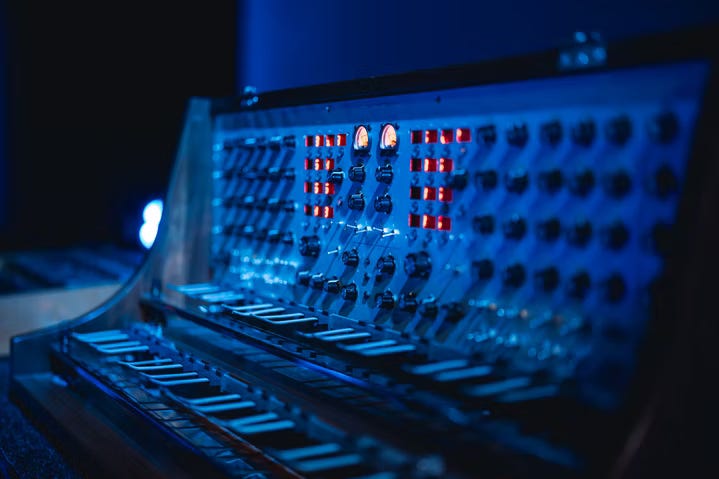
(One of LudoWic’s Mixtur-Trautonium’s - a modern day version of the synth manufactured by Jürgen Hiller at Trautoniks, the only manufacturer in the world.)
BEGINNINGS IN GERMANY
It’s 1930, and a new synth enters the world. Invented by Friedrich Trautwein in what is known today as Berlin’s University of the Arts, it was Germany’s offering into the world of synthesised sound. Interestingly, its invention came a year or two after the Ondes Martenot (France, 1928) and the Theremin (Soviet Russia, 1920).
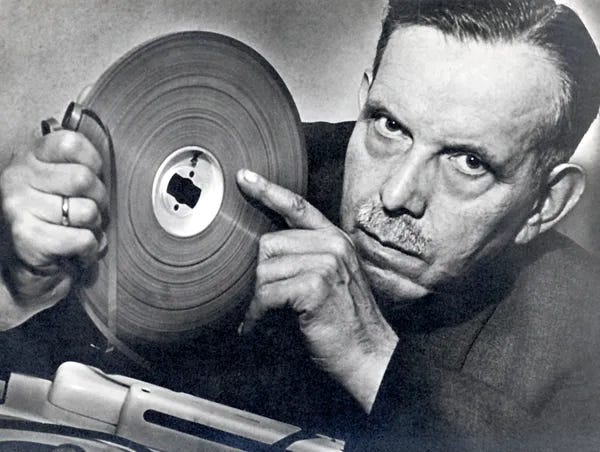
(Friedrich Trautwein)
It’s useful therefore to think of these 3 instruments belonging to similar categories of sound and sharing a similar musical contexts to one another: classical music being performed in new ways.
The Theremin sits in the orchestral space of the lead, singular voiced instrument (violins etc). The Ondes Martenot has qualities akin to woodwinds, and the Trautonium more low end brass and strings tints.
What set apart the Trautonium from the other two instruments however was its ability to generate Subharmonics - making the synth far more capable at sound design possibilities and experimentation.
Further developments and alterations were made to the synth over time, leading to the production of the Volkstrautonium (a smaller version of the synth) through to the more portable Konzert-Trautonium (which was destroyed in WW2). The most recognisable instrument of the trautonium family is called the Mixtur-Trautonium (a larger version of the synth).
(An early example of the Trautonium’s use)
Around 100-200 units of the Volkstrautonium were made by Telefunken in the early 1930’s (rare even by today’s standards). They were, unfortunately, too expensive and too hard to play for the general public, and proved a not so great business move for the company.
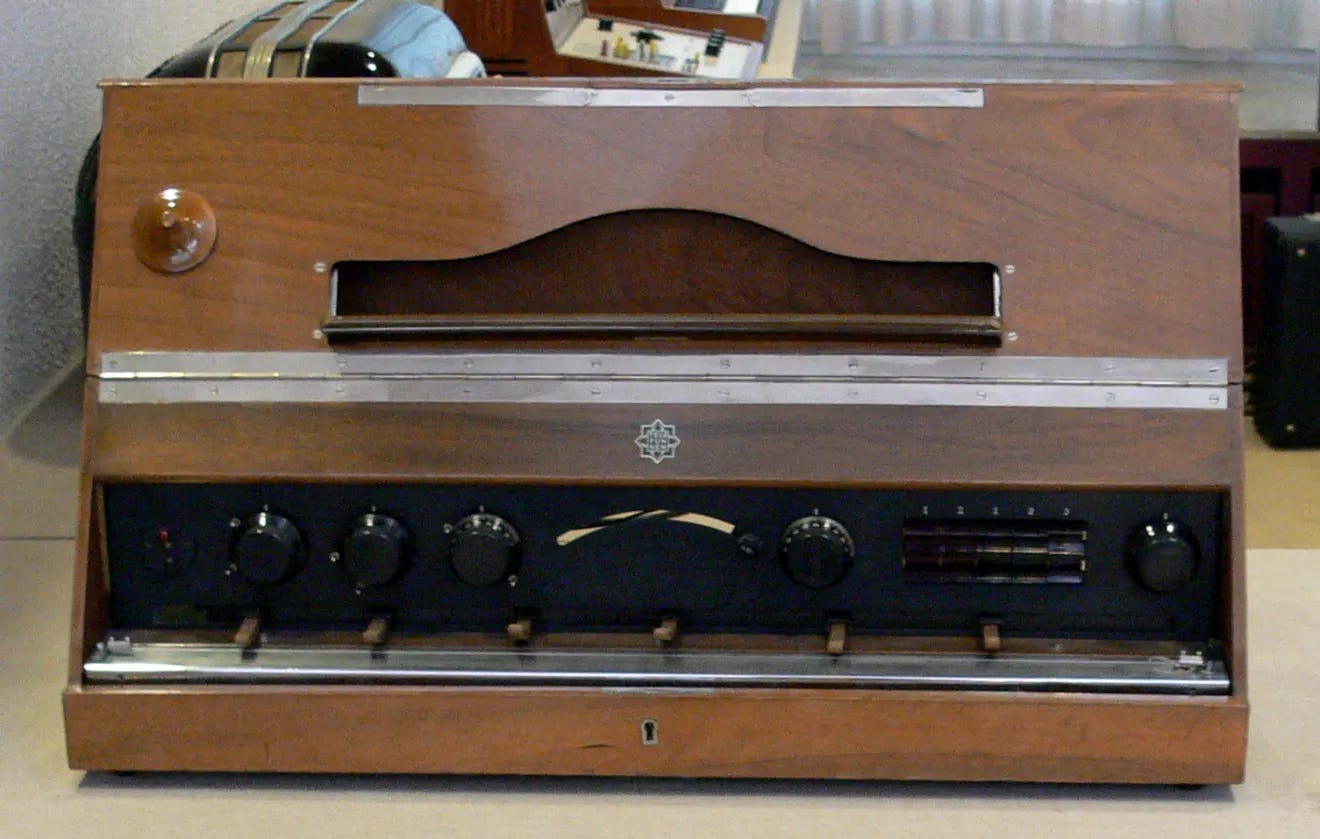
(Telefunken 1932 Volkstrautonium)
HOW THE SYNTH WORKS
I’m certainly no physicist, and my understanding of circuitry is basically nil, so i’ll go through this from a very top line level.
To get an idea of its mechanics, here’s a great video showing different points of view of how LudoWic plays the Mixtur-Trautonium:
The synth really stood out to me due to the nature of how it’s played: placing your fingers on metal resistor wires and strips that enables vibrato by applying different degrees of pressure, and gliding - two techniques that really lend itself to the synth’s expressive capabilities.
The really cool part though is the subharmonic generator, which consists of 4 sawtooth based waveforms, with the frequency of each subharmonic being integer multiples of the master frequency between 1-24.
So if the master frequency is set to C4 (261.63 Hz) which = 1, then the 1:2 integer is half of C4, which is C3 (130.81 Hz). Here, you have two tones an octave apart.
Following this, 1:3 means the master C4 frequency is divided by 3, 1:4 is the master C4 frequency divided by 4 etc…all the way through to 24.
This means that with the subharmonic generator, you can create 4 additional undertones, with each undertone being a subdivision of your master frequency, each at a subdivision between 1-24 at your choosing, all played at the same time.
In this way, you can make the synth generate chords with lovely melodic or dissonant content. Naturally, it also lends itself to sound design capabilities. Loads of undertones. Loads of rich harmonic content.
The synth also has formant filters, envelope generators and foot pedals which can be used to switch between chords.
For a more in depth understanding on how the synth works, check out this link: https://doepfer.de/traut/traut_e.htm
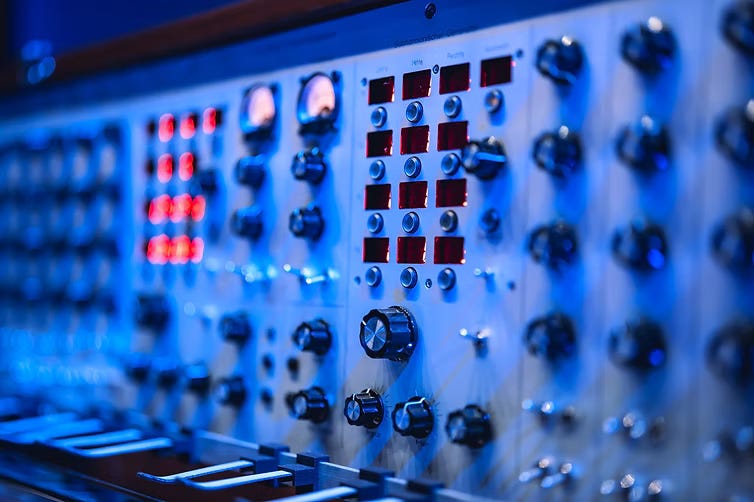
(The Subharmonic generator module on LudoWic’s Mixtur-Trautonium)
OSKAR SALA: THE PIONEER
One of, if not THE most pivotal figures who developed the technology and sound of the synth is a man named Oskar Sala, taking the instruments capabilities to new heights whilst increasing its public presence. The electronic music (and film music) world owe a lot to Sala for his innovations in these spaces.
Born in Griez, Germany, Sala moved to Berlin to study Physics, and worked alongside Friedrich Trautwein until his death in the 1950’s. Sala then dedicated his life to the instrument until his passing in 2002.
The main technological innovation introduced by Sala on the Mixtur-Trautonium was the inclusion of the Subharmonic generator as described above from around 1948 onwards.

(Orbital sharing an awesome demonstration of the synth by Sala)
Sala performed classical compositions on the synth alongside orchestras throughout the 30’s and 40’s, however in the late 50’s, Sala set up his own studio at the German Film company “Mars Film” - contributing forward thinking electronic soundtracks to over 400 films, working the Trautonium alongside all the latest developments in electronic instrumentation during the era.
Most famously, Sala produced the soundtrack to Alfred Hitchcock’s “The Birds”, with all the noises of the birds in the film made by the Trautonium. It’s an experimental soundtrack that really lends itself to the unsettling nature of the film.
Not only did Sala work on classical compositions with other composers (including Paul Hindemith), he taught music therapist Maria Schüppel the instrument, where it most likely influenced her work in her later years.
I’ve listed at the end of the article some of his Sala’s work on the Trautonium, from the more experimental sound design pieces through to the classical.
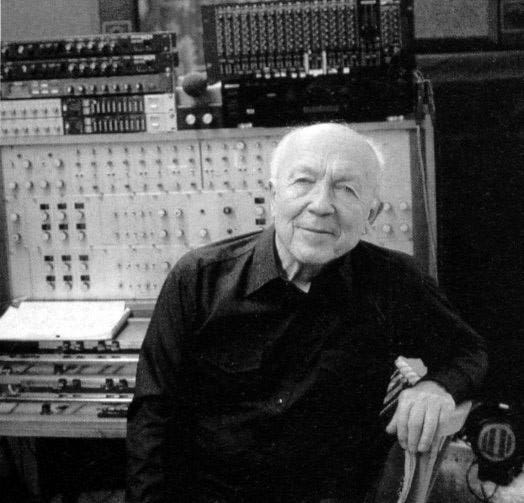
(Oskar Sala)
LUDOWIC: THE CURRENT FORBEARER
The Dutch artist is self described as: “…combining tactile sound with cinematic depth…creating immersive performances shaped by vintage synthesisers and physical sonification … [creating music that] feels both nostalgic and futuristic.”. It seems that the Trautonium is the key element that helps his music sit in this space.
Hi style of Trautonium playing sits more on the melodic end of the spectrum. Gentle & warm, with a lot of heart. It’s very much influenced by film and sits at the forefront of contemporary electronic music.
His work so far has culminated into his album “SUPER8 MEMORY” (2024) - recorded entirely with one of his custom made Mixtur-Trautonium’s (made by Trautoniks) - it’s an achingly beautiful record that is an all time personal favourite in the electronic world.
If there is only one piece of music you listen to from this piece which features a Trautonium, make sure it’s off of this record. It’s nostalgic, futuristic, and it’ll get you hooked:
In a recent interview with YouTuber and rare electronic instrument aficionado Hainbach, LudoWic described how he discovered the synth which was a very similar story to mine: a YouTube algorithm recommendation. And similarly to me, he fell in love with instrument instantly.
His obsession and dedication to the instrument is obvious. It seems to have influenced the rest of his artistic endeavours as he continues to explore the synths capabilities and make amazing music with it.
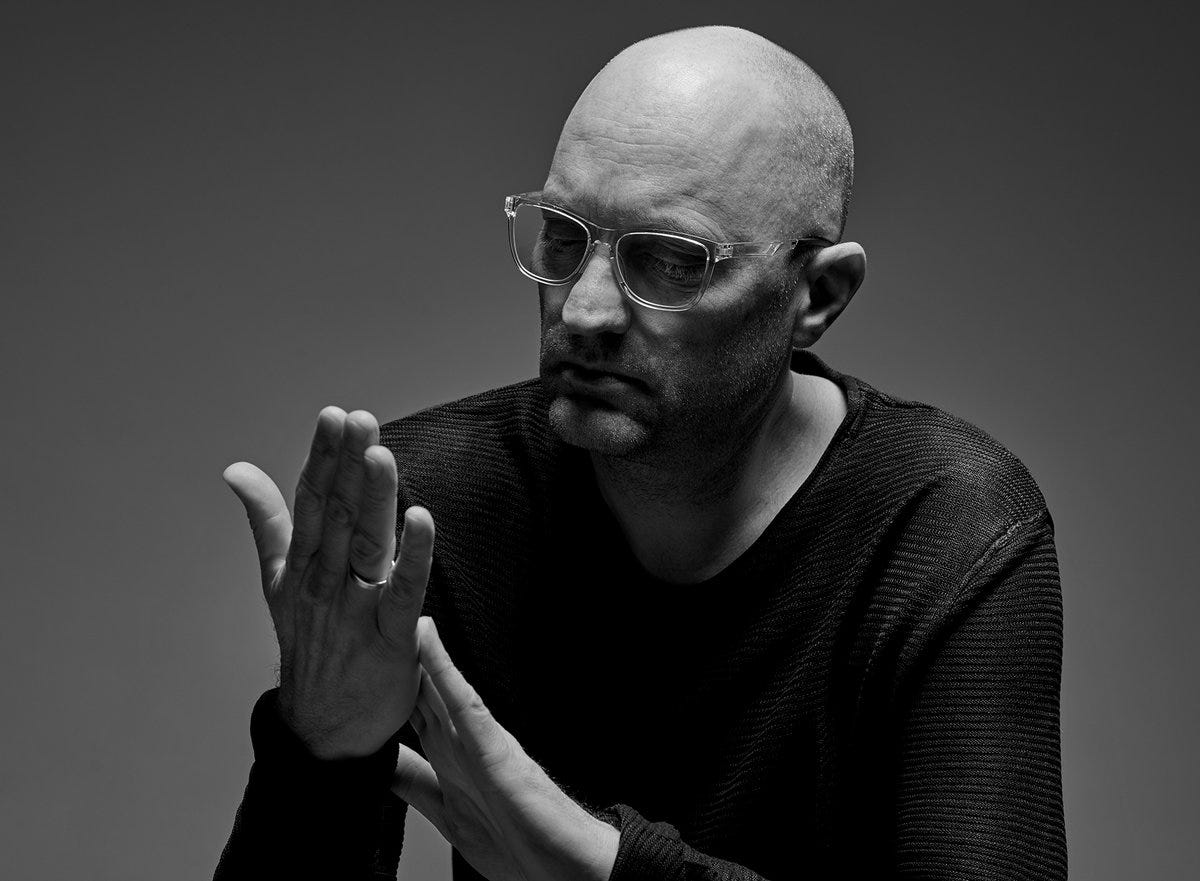
(Matheus Lodewijk, aka: LudoWic).
HONOURABLE MENTION: PETER PICHLER
Peter Pichler, asides from LudoWic, is (as far I’m aware) the only other current musician in the world who composes and tours with the Trautonium - also carrying the torch for it’s use across film scores and classical composition. His music is in a similar realm to some of Oskar Sala’s - spanning both the experimental and classical. I’ve linked to an album of Pichler’s below that explores both these aspects.
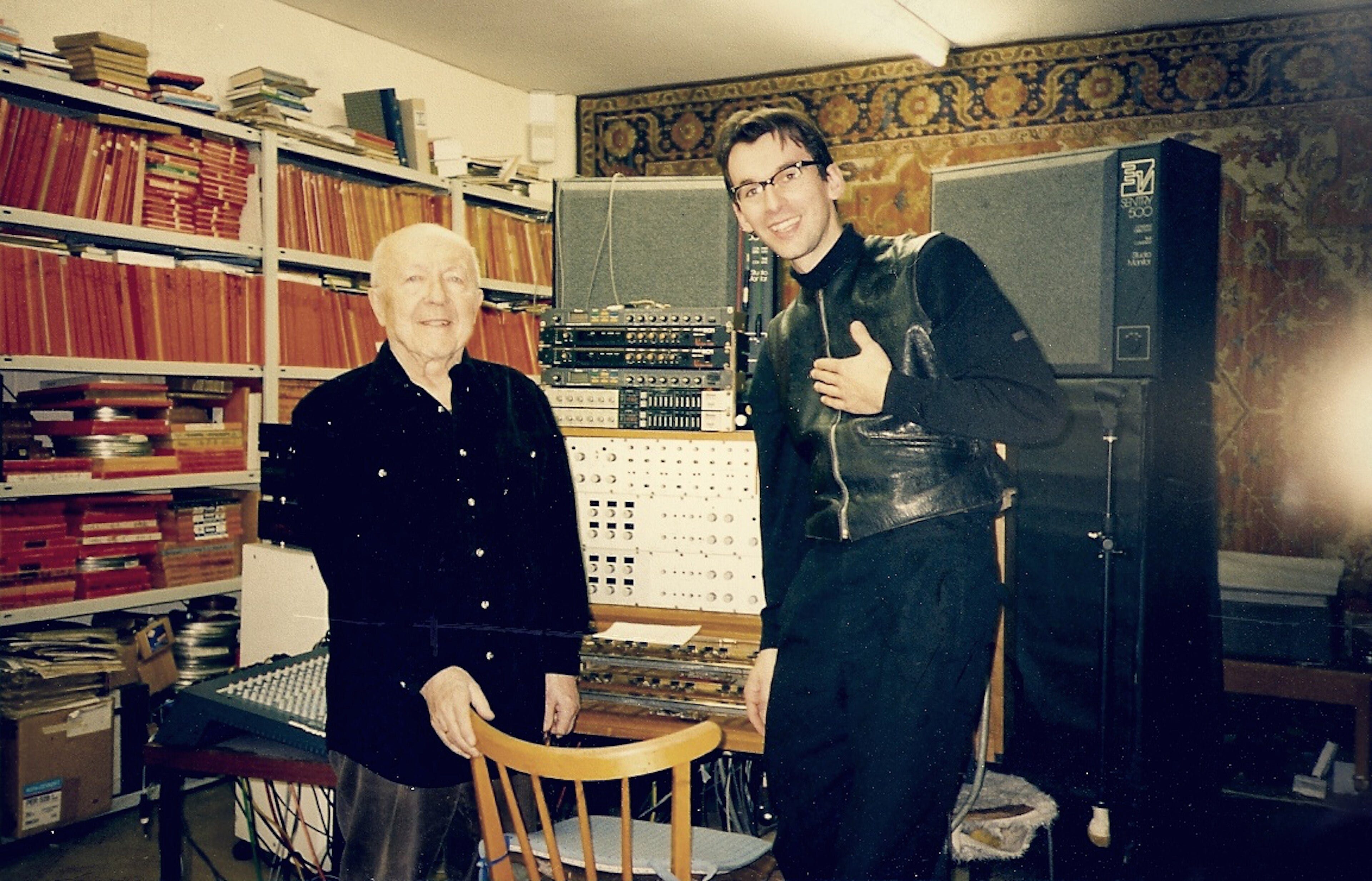
(Oskar Sala (L) & Peter Pichler (R) in Sala’s studio, 1996 - Mixtur-Trautonium in the background).
LUDOWIC INTERVIEW WITH HAINBACH:
Finally, this is a wonderful interview and in depth look at LudoWic’s current live set up, which features two Trautoniums (Mixtur & Volks), complete with demonstrations of their respective sounds. Definitely worth a watch, if not just to nerd out on all the amazing gear he has and how he organises his live set with hardware and a modular synth!
Thank you for reading. If there are any mistakes in the piece, my apologies. Do let me know so it can be corrected.
And if (big if!) anyone has a Trautonium that they’d be willing to let me play…please hit me up. I’m dying to get my hands on one of them, just want to be able to say I’ve played one, it’s a beautiful thing!
RECOMMENDED LISTENING (Anything with a * is essential!)
*Oskar Sala - Electronic Virtuosity
*Harald Genzmer & Oskar Sala - Trautonium Konzerte
Peter Pichler - TRAUTONIUM VIBES
Oskar Sala - Sound Effects from Hitchcock’s ‘The Birds’ and More
Harald Genzmer & Oskar Sala - Électronique Et Stéréophonie (Musique Spatiale)
Oskar Sala - Elektronische Impressionen
SOURCES
https://doepfer.de/traut/traut_e.htm
https://120years.net/the-trautoniumdr-freidrich-trautweingermany1930/
https://www.ludowic.com/trautonium
https://www.trautoniks.de/com/product.html
https://www.aljazeera.com/news/2022/7/18/oskar-sala-why-google-honours-him-today
This is a really cool instrument. The interface reminds me of Buchla synths with how they give you really deep controls and some ability to break away from a traditional piano keyboard interface. Never heard of it before this article.